How Seoul's Climate Card Works: Purchase, Pricing, and Usage Rules
The Climate Card offers unlimited use of Seoul's subway, buses, Ttareungi bikes, and Hangang Bus for 30 days after a one-time charge.
Lim Dae-ho ·
published
· version 1
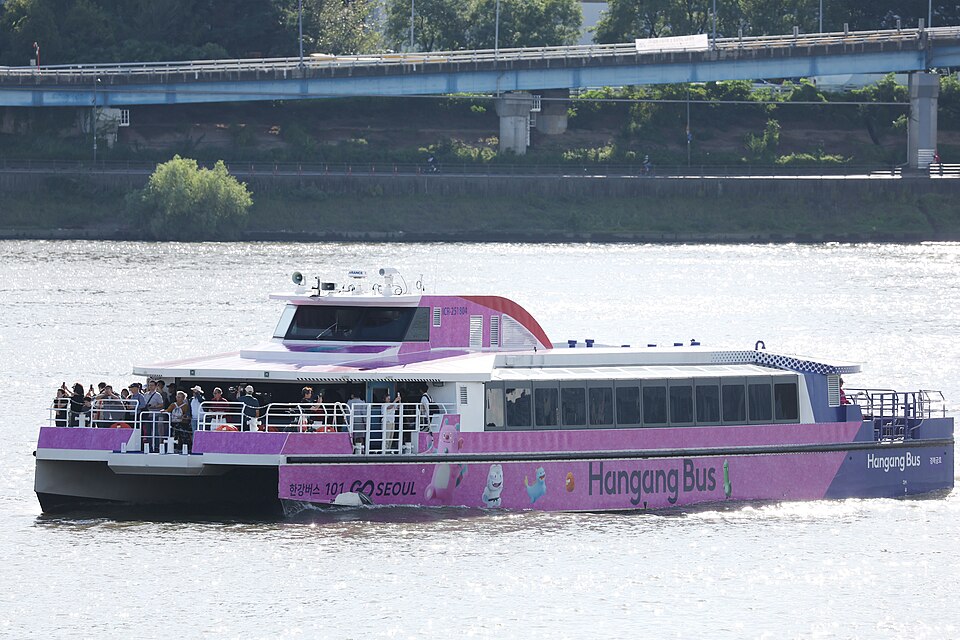
Photograph taken on 2025-09-18.
What this means for travelers
Travelers using an Android phone can get a mobile Climate Card, while iOS users need a KRW 3,000 physical card that must be registered online via the Tmoney Card & Pay website to enable refunds and Ttareungi access. The card must be tapped both on and off, and missing a tap-off twice suspends service for 24 hours. Foreigners without a Korean bank account can still get a refund by visiting Tmoney headquarters, though refunds are not available after the card's expiration date.
What the Card Offers
Unlimited use of public transportation (subway, bus), Ttareungi (Seoul Bike), and Hangang Bus for 30 days after charging with a one-time fare.
Included: Seoul-based subway lines plus partial Gyeonggi-serviced subway routes, Seoul-licensed city and town buses, Ttareungi, and Hangang Bus.
Physical card is for iOS users and the digitally vulnerable, and costs KRW 3,000.
Physical cards are sold at new card vending machines in subway stations across Seoul Metro Lines 1–8 (available between Seoul Station and Cheongnyangni Station on Line 1) and at convenience stores near subway stations of Line 9, Ui-Sinseol Line, and Sillim Line.
Physical card users must register their card online via the Tmoney Card & Pay website, one card per person. Refunds and Ttareungi access are unavailable for an unregistered card.
Climate Cards can be purchased and recharged using international credit and debit cards, and short-term passes are purchasable with international credit cards (effective March 20, 2025).
Mobile payment methods: bank wire transfer or a domestic credit/debit card issued in the user's name.
Physical card payment methods: cash or domestic credit/debit card (corporate cards not accepted).
Cost
30-day pass without Ttareungi: KRW 62,000.
30-day pass with Ttareungi: KRW 65,000.
30-day pass with Hangang Bus: KRW 67,000.
30-day pass with Ttareungi and Hangang Bus: KRW 70,000.
The 1-day pass does not include Ttareungi and Hangang Bus.
Discounts: KRW 7,000 for ages 19–39; KRW 7,000 for ages 13–18; KRW 7,000–17,000 for households with multiple children; KRW 17,000 for low-income users.
Charging and Validity
Charging kiosks are located inside subway stations on Seoul Metro Lines 1 to 8, Line 9, Ui-Sinseol Line, Sillim Line, and Gimpo Goldline.
Cards cannot be charged in advance.
The valid term begins on the date of charging the card. For example, a 1-day pass charged on Monday, July 1 is valid until the last bus or subway on July 1.
Users may designate the start date within five days of charging, excluding short-term passes.
Existing 30-day Climate Cards can be recharged until August 31, 2026.
Existing Climate Cards can still be recharged with short-term passes (1-, 2-, 3-, 5-, and 7-day).
Physical cards can be charged each month after purchase.
A Climate Card Plus is set to release on September 1 and will be available to Korean nationals.
Using the Card
The card (mobile or physical) must be tapped to get on and off, with NFC mode enabled.
Failing to tap off two times results in suspension of service use for 24 hours from the time of the last boarding.
When the card number is registered on the Tmoney GO app, the Climate Card can be used for two-hour Ttareungi passes during the validity period.
Physical cards must be registered on the Tmoney website to be used to produce a two-hour Ttareungi pass.
Where It Works
Climate Card can be used on Seoul-licensed buses even if boarding or disembarking outside Seoul.
Climate Card cannot be used when disembarking outside the service range, even if boarding within the service range. For example, a rider cannot board at Jongno 3(sam)-ga Station and disembark at Indeogwon Station; the fare is collected by station attendants.
On Line 7, a rider can disembark at a station between Seongnam Station and Kkachiul Station after boarding within the service range, but cannot board at these stations. This extension (Kkachiul Station to Seoknam Station, for getting off only) took effect January 27, 2025.
On AREX, riders can get off at Incheon International Airport Terminal 1 and Terminal 2 but cannot board there (effective September 13, 2024).
Subway line service ranges: Line 1 (Onsu Station/Geumcheon-gu Office Station to Dobongsan Station); Line 2 (all stations); Line 3 (all stations); Line 4 (Government Complex Gwacheon Station to Jinjeop Station); Line 5 (all stations); Line 6 (all stations); Line 7 (Onsu Station to Jangam Station); Line 8 (all stations); Line 9 (all stations); Ui-Sinseol Line (all stations); Sillim Line (all stations); Gyeongui-Jungang Line (Tanhyeon Station to Yangwon Station/Seoul Station); Suin-Bundang Line (Cheongnyangni Station to Ori Station); AREX (Gimpo Int'l Airport Station to Seoul Station); Gyeongchun Line (Cheongnyangni Station to Sinnae Station); Gimpo Goldline (all stations); Seohae Line (Gimpo Int'l Airport Station to Ilsan Station); Gyeonggang Line (Pangyo Station to Imae Station).
Refunds
Refund amount = total charged amount – total amount used on public transportation – KRW 500 fee.
A refund must be requested before the end of the use period.
Refunds are not available after the expiration date, including for normal, lost, or defective cards.
Refunds may be difficult if the card is not in the user's own name.
Foreigners without a bank account in Korea can visit Tmoney headquarters to receive a refund.
Sources
Seoul Metropolitan Government —
Climate Card(official notice from the publishing body, collected Fri 7 Aug 2026 (KST))
One source. Everything above rests on Seoul Metropolitan Government alone.
We have not found a second, independent account of it, so treat the detail as that
organisation states it and check the original before you rely on it.
69 structured facts in this article
were checked against the sources above. See our
fact-check policy.